Tell us about the job
Takes about a minute. No obligation.
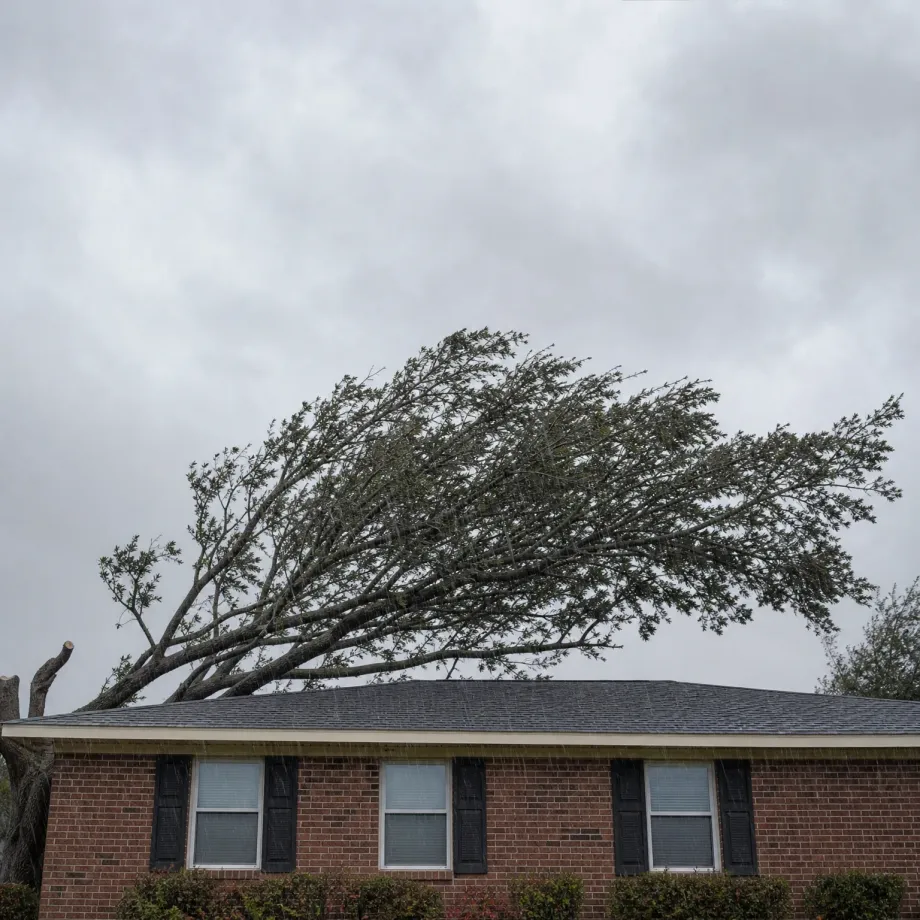
A boiler repair in Alamance County starts with what the system has been running against. 131 severe weather events were recorded in Alamance County, North Carolina between 2015 and 2024. At that rate, severe weather is a standing feature of life for equipment here, not an occasional disruption, and a contractor who opens a boiler and finds a cracked heat exchanger or a failed circulator pump has to account for cumulative load before blaming deferred maintenance. That distinction produces a different repair scope and sometimes a different parts list.
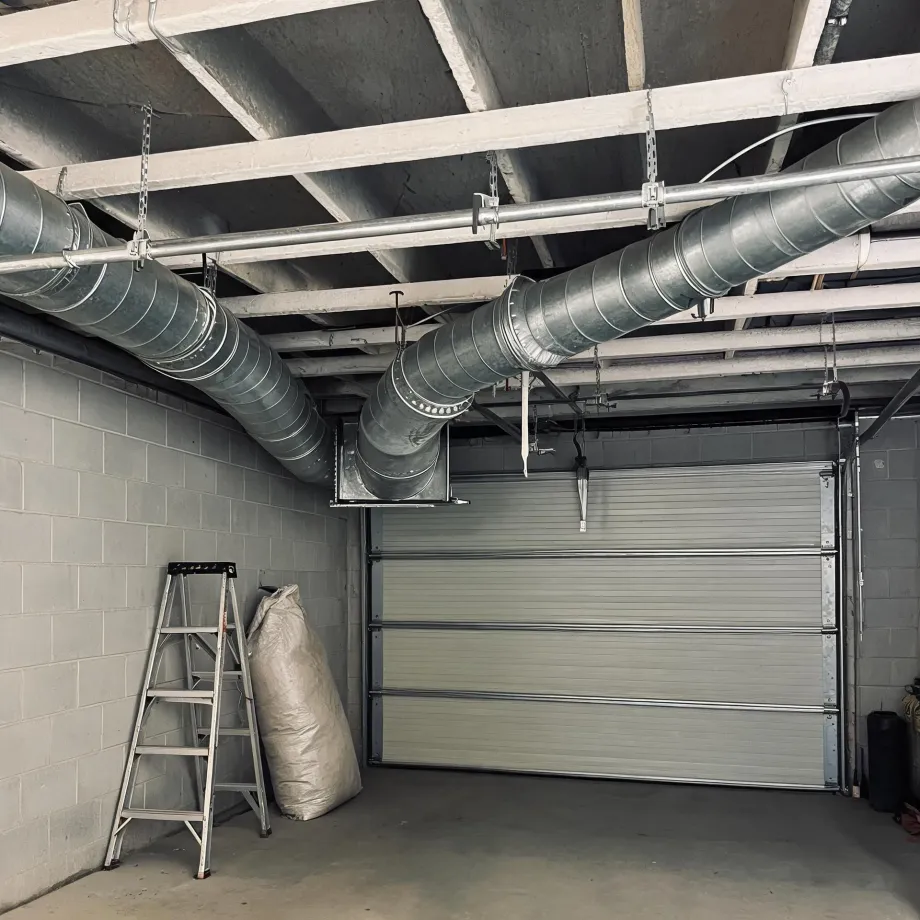
Piping that has moved heat through a house for that many years collects sediment, develops pinhole corrosion, and throws off pressure readings that would otherwise point straight to the boiler itself. Half the homes in Alamance County, North Carolina were built in 1988 or earlier (2020-2024 ACS 5-year). A contractor opening a boiler in stock like this has to account for what the distribution system has done to it: sludge in the heat exchanger, expansion tank failure driven by water chemistry, and zone valves that have been fighting dirty fluid for years. The boiler may be the presenting problem, but what it has been working against is what shapes the repair.
The Parts of a Boiler a Contractor Checks First
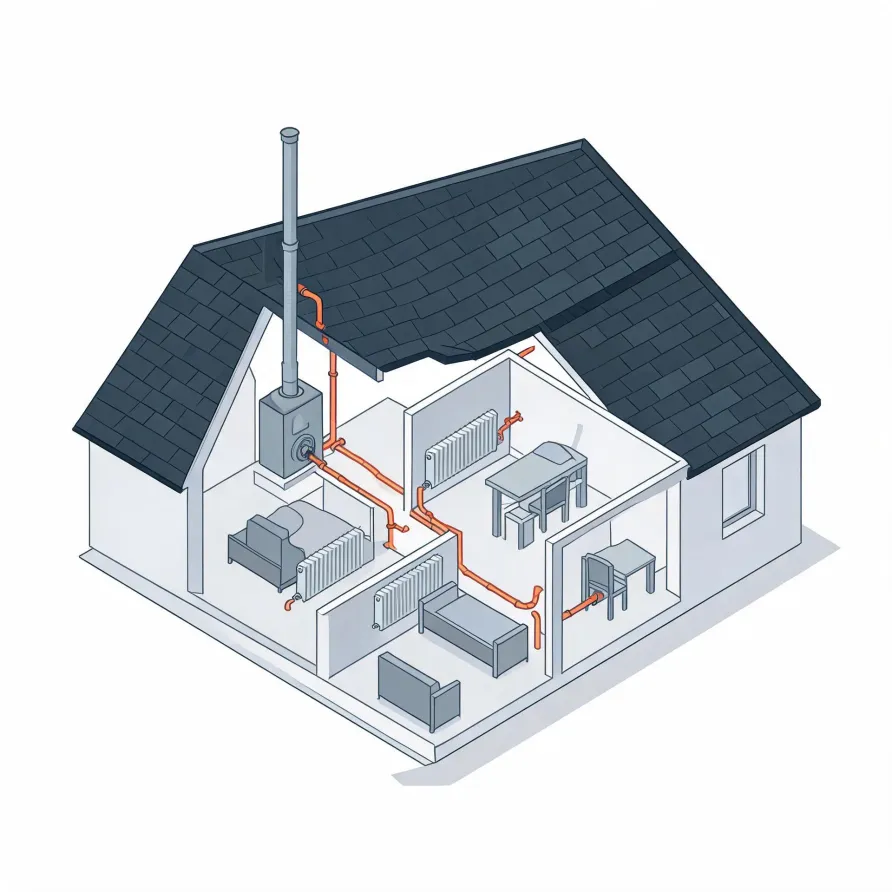
The boiler itself sits in the basement or utility room and is the piece a contractor goes to first. It heats water and sends it out through the system. When a boiler is running poorly or not at all, the heat exchanger, burner, and pressure vessel inside that unit are where the diagnosis begins.
From the boiler, pipes carry hot water to radiators or baseboards positioned throughout the living spaces. The circulator pump, which moves water through those pipes, and the expansion tank, which keeps pressure stable, both sit close to the boiler and are common points of failure when heat delivery becomes uneven or stops entirely.
The drawing shows a typical layout, and a licensed contractor determines what applies to your specific system.
Find a contractor in Alamance CountyAlamance County, by the numbers
131 severe weather events were recorded in Alamance County, North Carolina between 2015 and 2024.
NOAA National Centers for Environmental Information, Storm Events Database, bulk CSV export, events 2015-01-01 through 2024-12-31.Half the homes in Alamance County, North Carolina were built in 1988 or earlier (2020-2024 ACS 5-year).
U.S. Census Bureau, 2020-2024 American Community Survey 5-Year EstimatesAlamance County, North Carolina holds 77,073 housing units (2020-2024 ACS 5-year).
U.S. Census Bureau, 2020-2024 American Community Survey 5-Year EstimatesOwners occupy 65.0% of the occupied homes in Alamance County, North Carolina (2020-2024 ACS 5-year).
U.S. Census Bureau, 2020-2024 American Community Survey 5-Year EstimatesCodes & Standards Behind Boiler Repair in Alamance County, North Carolina2 sourced rules and standards
Licensing Rules for HVAC Repair in Alamance County, North Carolina
North Carolina issues Class I heating licenses covering all systems in all structures, and Class II licenses covering heating systems in single-family detached residential dwellings.
North Carolina requires a license before any person or firm may engage in, or offer to engage in, the business of heating contracting.
Severe Weather Events in Alamance County
Boilers take on extra load whenever outdoor conditions push hard against a building's thermal envelope. How often that happens in Alamance County shapes how hard local equipment works and how quickly wear accumulates.
131 severe weather events, 2015–2024. Source: NOAA National Centers for Environmental Information, Storm Events Database.