Tell us about the job
Takes about a minute. No obligation.
A contractor quoting boiler repair here starts with the system itself: how old it is, how it has been maintained, and whether the original install was done right. 40 severe weather events were recorded in Perquimans County, North Carolina between 2015 and 2024. At that rate, severe weather sits at the edge of operating life rather than at the center of it. A boiler that is struggling in this county is more likely worn from years of use or starved of routine service than beaten down by storm load. Heat exchangers crack, controls fail, and pressure relief valves go bad on their own schedule, and that schedule is set by age and care.
Boilers in houses built around this county's median vintage often contain components that have cycled through discontinuation since original installation. Half the homes in Perquimans County, North Carolina were built in 1991 or earlier (2020-2024 ACS 5-year). A contractor who opens a unit here checks part numbers before pricing a repair, because what looks like a straightforward fix can stall on a heat exchanger gasket or zone valve that the original manufacturer no longer produces under that specification. Secondary suppliers carry some of it; some of it has to be cross-referenced to a current equivalent that may fit differently than the original. That sourcing question is what shapes the repair scope.
The Parts of a Boiler a Contractor Checks First
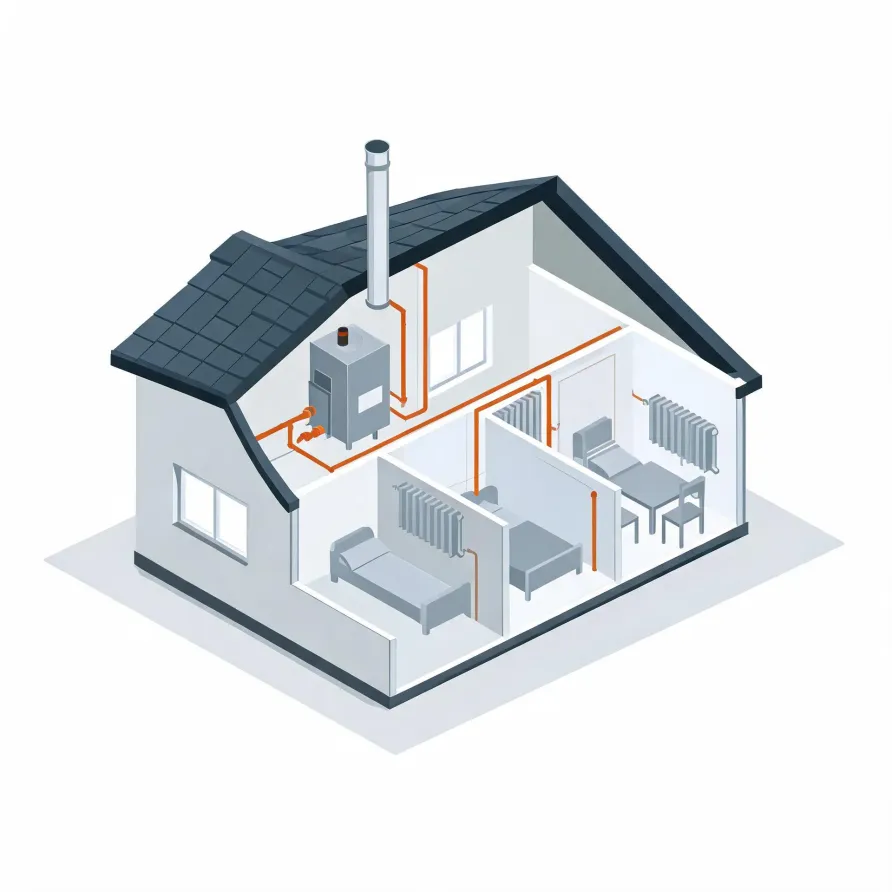
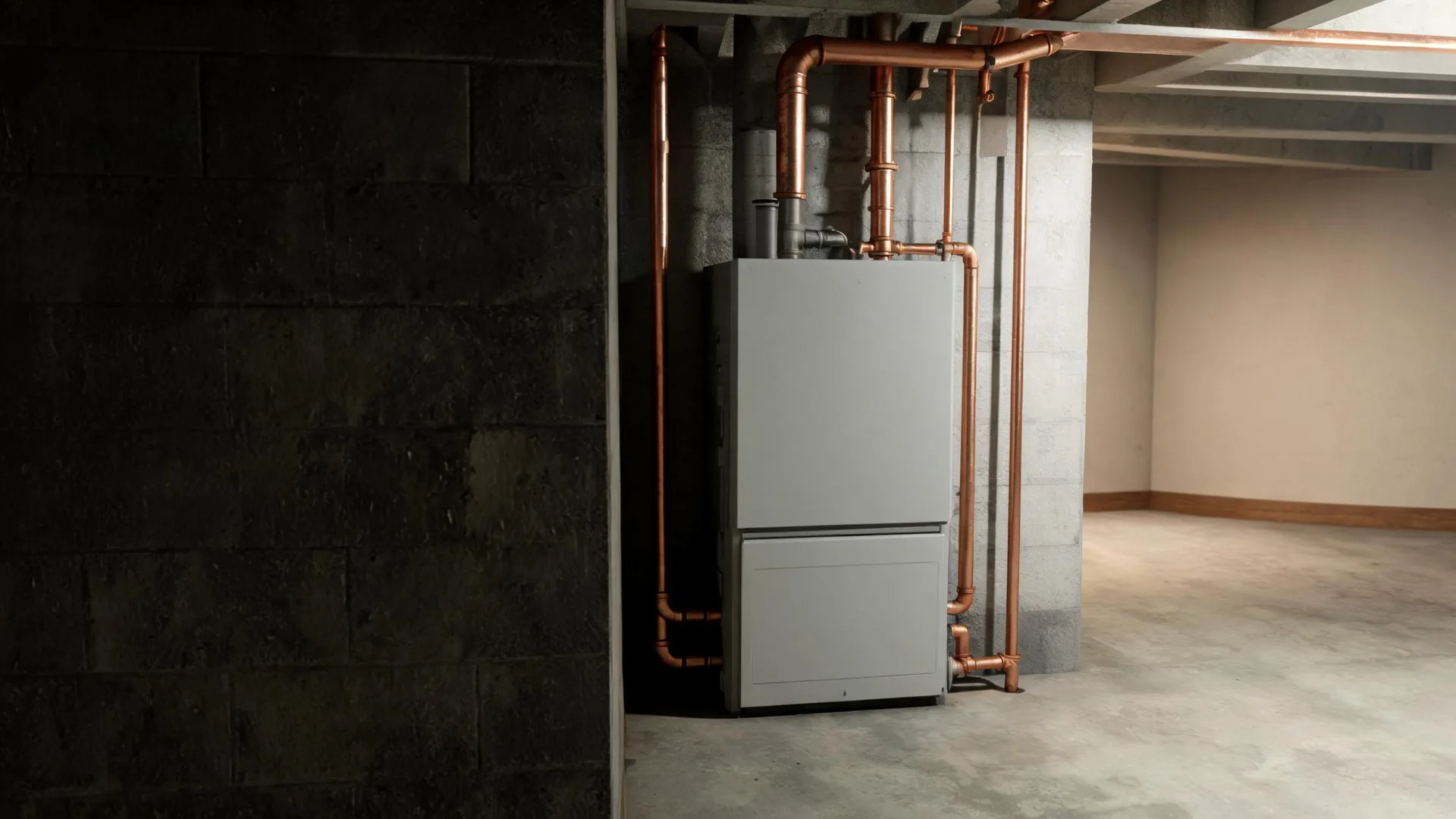
The boiler itself sits in a utility room, basement, or mechanical closet and is the piece a contractor goes to first. It heats water and pushes it through the system. When it is the source of the problem, the signs range from no heat at all to uneven heat across rooms, and a contractor will examine the burner assembly, the heat exchanger, and the pressure vessel before moving on.
Radiators or baseboard convectors sit in the living spaces and transfer heat from the hot water into each room. The circulator pump, usually mounted close to the boiler, moves water through the loop, and the expansion tank nearby absorbs pressure changes as water heats and cools. A faulty pump or a waterlogged expansion tank are among the first things a contractor rules out when the boiler fires but rooms stay cold.
The drawing shows a representative layout, and a licensed contractor determines which components and conditions apply to this particular house.
Find a contractor in Perquimans CountyPerquimans County by the Numbers
40 severe weather events were recorded in Perquimans County, North Carolina between 2015 and 2024.
NOAA National Centers for Environmental Information, Storm Events Database, bulk CSV export, events 2015-01-01 through 2024-12-31.Half the homes in Perquimans County, North Carolina were built in 1991 or earlier (2020-2024 ACS 5-year).
U.S. Census Bureau, 2020-2024 American Community Survey 5-Year EstimatesPerquimans County, North Carolina holds 6,967 housing units (2020-2024 ACS 5-year).
U.S. Census Bureau, 2020-2024 American Community Survey 5-Year EstimatesOwners occupy 76.5% of the occupied homes in Perquimans County, North Carolina (2020-2024 ACS 5-year).
U.S. Census Bureau, 2020-2024 American Community Survey 5-Year EstimatesCodes & Standards Governing Boiler Repair in Perquimans County, North Carolina2 sourced rules and standards
Licensing Rules for HVAC Repair in Perquimans County, North Carolina
North Carolina issues Class I heating licenses covering all systems in all structures, and Class II licenses covering heating systems in single-family detached residential dwellings.
North Carolina requires a license before any person or firm may engage in, or offer to engage in, the business of heating contracting.
Severe Weather Events in Perquimans County
Boilers work hardest when outdoor conditions are at their worst, and that workload accumulates over years of local weather. Stress on heating equipment is a county-level fact, which is why repair needs here reflect what the climate in this area actually does to the system.
40 severe weather events, 2015–2024. Source: NOAA National Centers for Environmental Information, Storm Events Database.