Tell us about the job
Takes about a minute. No obligation.
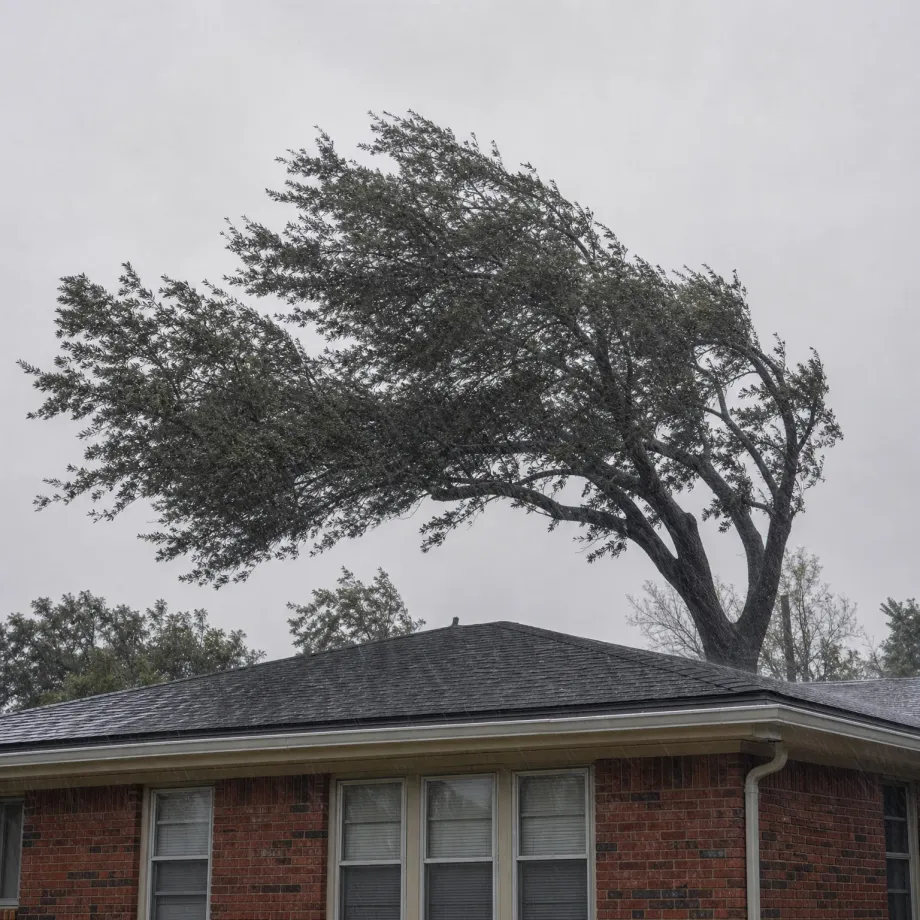
A contractor called out to repair a boiler in Macon County is not working against a backdrop of relentless weather load. 35 severe weather events were recorded in Macon County, North Carolina between 2015 and 2024. At that rate, severe weather is an event in this area rather than a standing condition, which means the equipment in most homes here has not been ground down by accumulated storm exposure. When a boiler fails, the contractor looks first at heat exchanger wear, sediment buildup, and whether the original install was done to spec. Age and maintenance history explain most of what they find.
Boiler systems in houses built this long ago carry a repair history that shows up inside the unit itself: sediment in the heat exchanger, corroded fittings, valves that have cycled so many times their seals no longer hold. Half the homes in Macon County, North Carolina were built in 1987 or earlier (2020-2024 ACS 5-year). A contractor opening a boiler in stock that old is working through what time and use have done to specific components, and whether the parts that system takes are still in production. Age on the nameplate narrows the search; the opened unit decides the job.
The Parts of a Boiler a Contractor Checks First
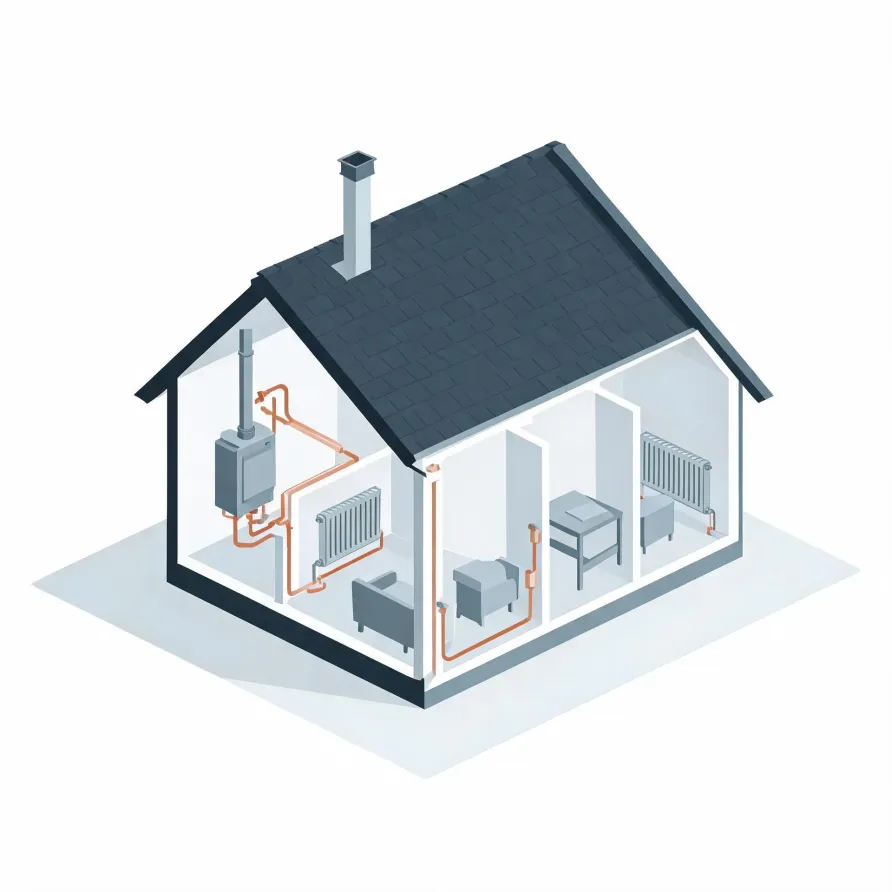
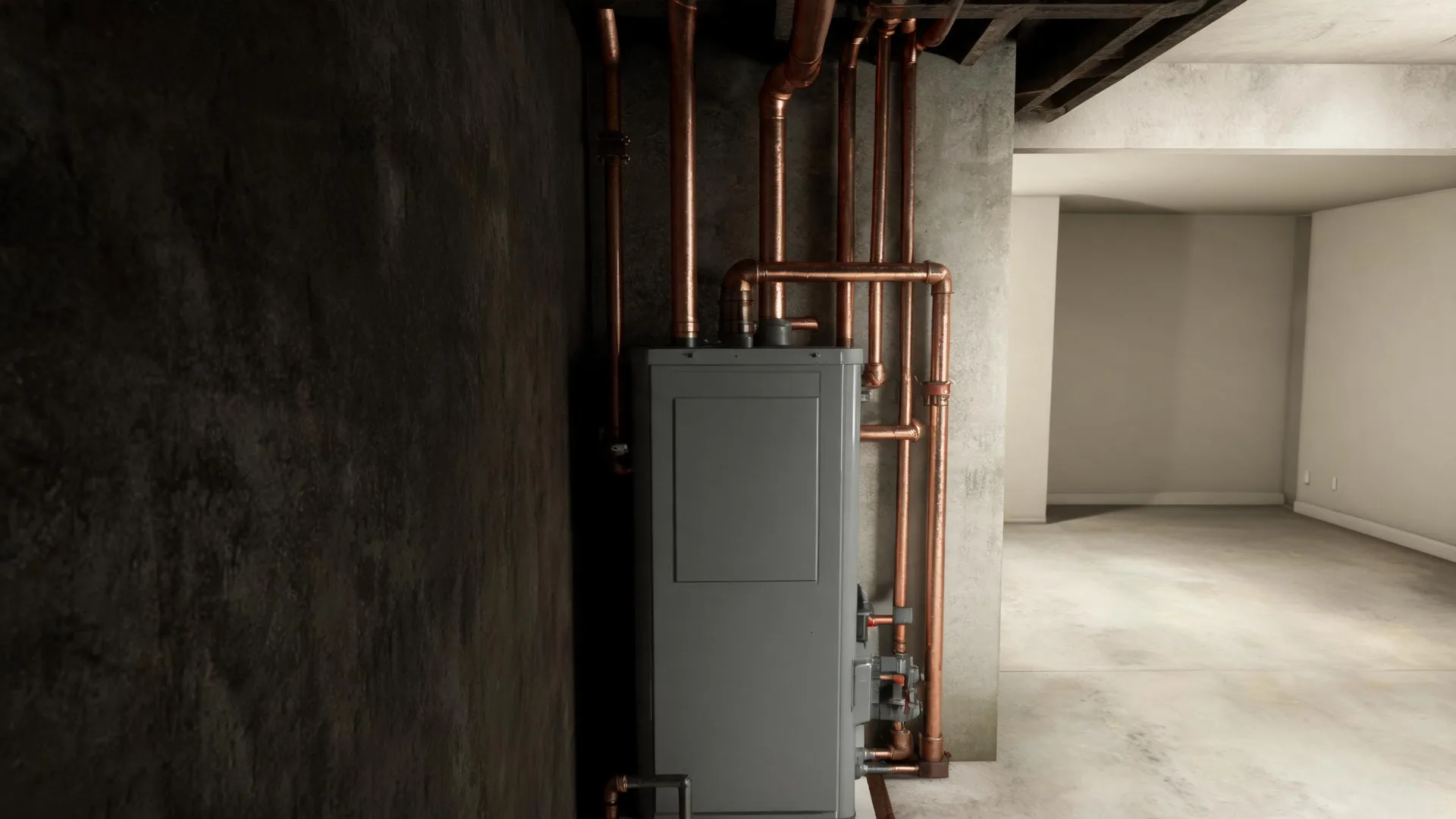
The boiler itself sits in a utility space, basement, or mechanical room and is the unit that heats water and circulates it through the system. When something goes wrong with heat output or pressure, the contractor starts here, looking at the heat exchanger, the burner assembly, and the pressure relief valve.
Radiators or baseboard convectors sit in the living spaces and are where heat actually transfers into the rooms. The circulator pump, which moves heated water through the pipes, and the expansion tank, which manages pressure as water temperature changes, are the other pieces a contractor checks when a boiler is underperforming or losing pressure.
The drawing shows a general layout of how these parts relate to one another, and a licensed contractor will determine which of them are involved in the problem at your house.
Find a contractor in Macon CountyMacon County, by the numbers
35 severe weather events were recorded in Macon County, North Carolina between 2015 and 2024.
NOAA National Centers for Environmental Information, Storm Events Database, bulk CSV export, events 2015-01-01 through 2024-12-31.Half the homes in Macon County, North Carolina were built in 1987 or earlier (2020-2024 ACS 5-year).
U.S. Census Bureau, 2020-2024 American Community Survey 5-Year EstimatesMacon County, North Carolina holds 27,216 housing units (2020-2024 ACS 5-year).
U.S. Census Bureau, 2020-2024 American Community Survey 5-Year EstimatesOwners occupy 77.6% of the occupied homes in Macon County, North Carolina (2020-2024 ACS 5-year).
U.S. Census Bureau, 2020-2024 American Community Survey 5-Year EstimatesCodes & Standards Governing Boiler Repair in Macon County, North Carolina2 sourced rules and standards
Licensing and Legal Requirements in Macon County, North Carolina
North Carolina issues Class I heating licenses covering all systems in all structures, and Class II licenses covering heating systems in single-family detached residential dwellings.
North Carolina requires a license before any person or firm may engage in, or offer to engage in, the business of heating contracting.
Severe Weather Events in Macon County
Extreme weather puts a hard load on heating equipment. Boilers that cycle through temperature swings and power interruptions wear faster, and repair needs in Macon County reflect what the local climate actually delivers.
35 severe weather events, 2015–2024. Source: NOAA National Centers for Environmental Information, Storm Events Database.