Tell us about the job
Takes about a minute. No obligation.
A boiler repair in Watauga County starts with the load the system has already been running against. 119 severe weather events were recorded in Watauga County, North Carolina between 2015 and 2024. At that rate, severe weather is a standing condition, and heat exchangers, expansion tanks, and pressure relief valves carry the consequences of it over years. A contractor working a repair here checks those components for weather-driven fatigue before attributing a failure to anything else. What they find in those parts often sets the repair scope more than the symptom that prompted the call.
Boilers in houses this old carry a history inside them. Half the homes in Watauga County, North Carolina were built in 1988 or earlier (2020-2024 ACS 5-year). That means a contractor opening a boiler here will often find heat exchanger surfaces and distribution lines that have been through enough heating seasons to accumulate scale, sediment, or corrosion alongside whatever component actually failed. The presenting symptom and the underlying condition are frequently two separate things, and the repair scope is set by what the opened system shows, not by the call that came in.
The Parts of a Boiler a Contractor Checks First
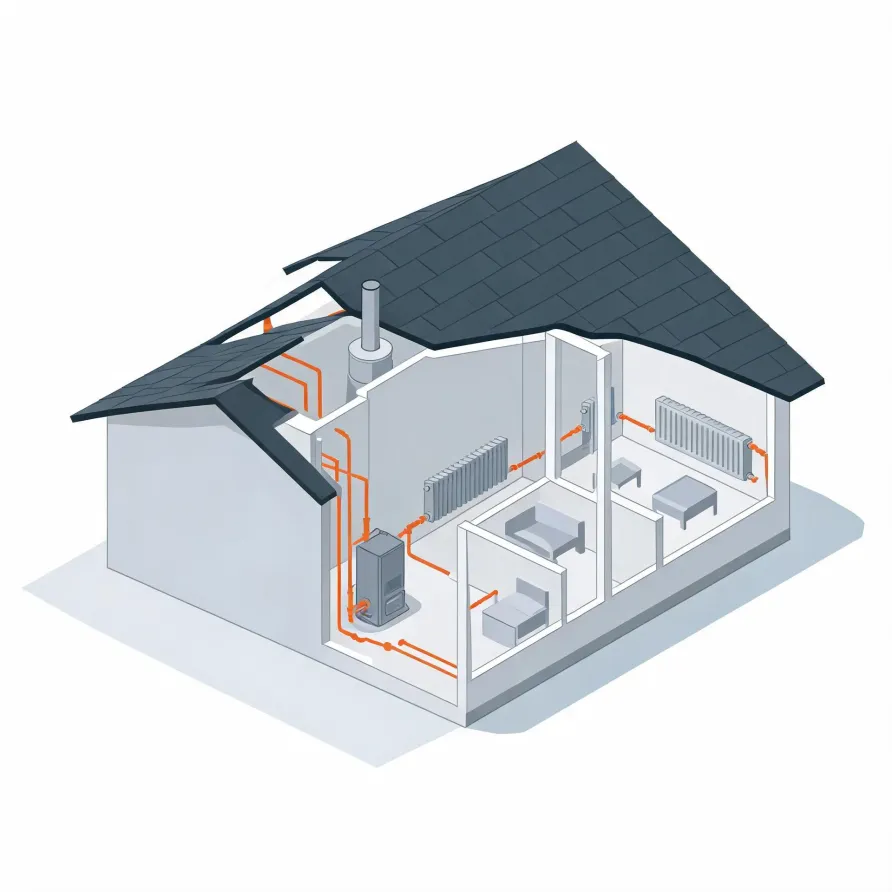
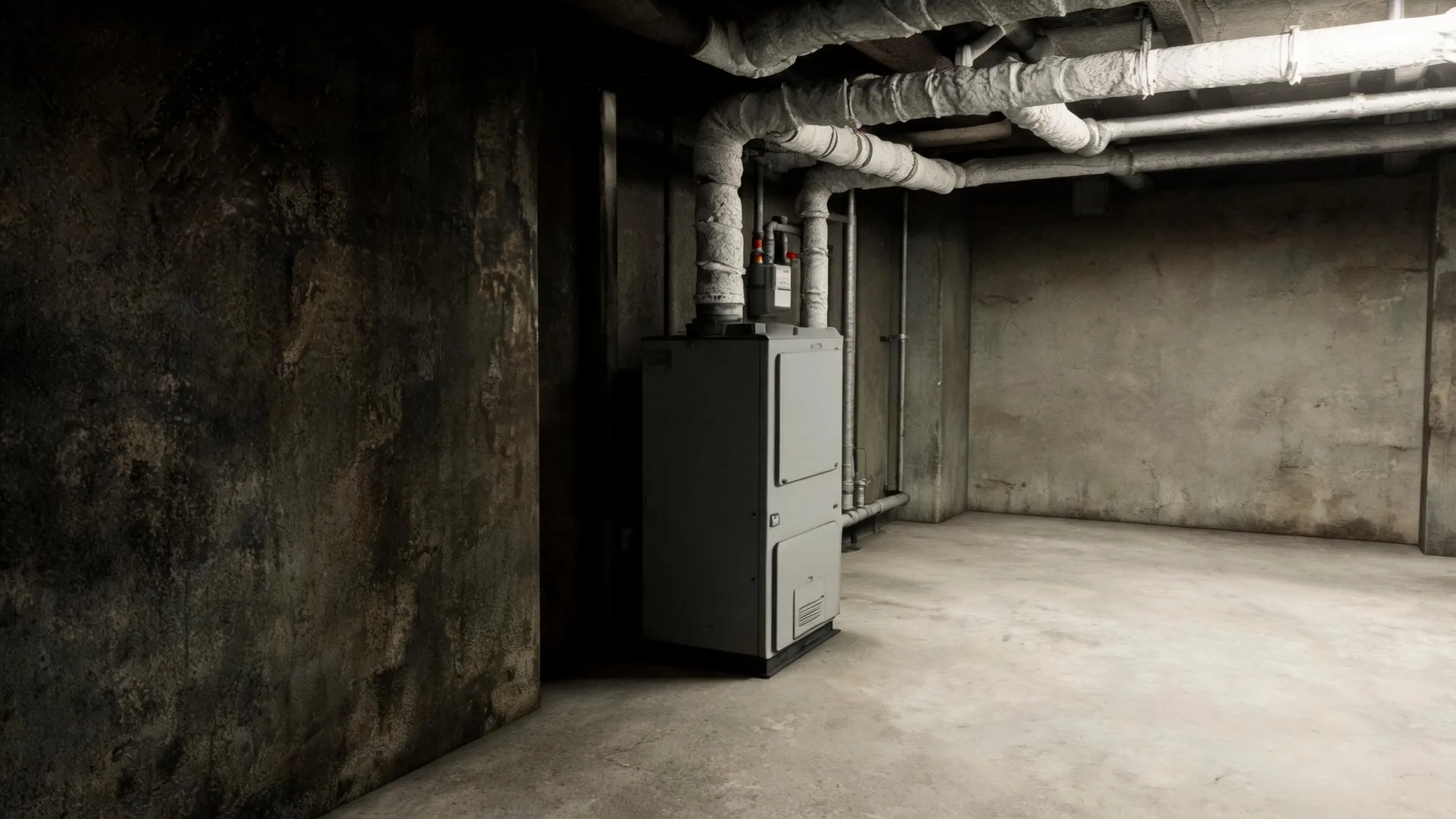
The boiler itself sits in the basement or mechanical room and is where water gets heated before it moves through the house. When heat is uneven, rooms stay cold, or the system makes noise, a contractor starts here, checking the heat exchanger, the burner, and the pressure vessel for wear, corrosion, or failure.
From the boiler, pipes carry hot water to radiators or baseboard units in each room, and a circulator pump keeps that water moving. The expansion tank, pressure relief valve, and thermostat controls all sit close to the boiler unit itself. Any one of these can be the source of a problem.
The drawing shows a general layout of a boiler system, and a licensed contractor determines which components apply to your specific home and situation.
Find a contractor in Watauga CountyWatauga County, by the record
119 severe weather events were recorded in Watauga County, North Carolina between 2015 and 2024.
NOAA National Centers for Environmental Information, Storm Events Database, bulk CSV export, events 2015-01-01 through 2024-12-31.Half the homes in Watauga County, North Carolina were built in 1988 or earlier (2020-2024 ACS 5-year).
U.S. Census Bureau, 2020-2024 American Community Survey 5-Year EstimatesWatauga County, North Carolina holds 33,355 housing units (2020-2024 ACS 5-year).
U.S. Census Bureau, 2020-2024 American Community Survey 5-Year EstimatesOwners occupy 62.1% of the occupied homes in Watauga County, North Carolina (2020-2024 ACS 5-year).
U.S. Census Bureau, 2020-2024 American Community Survey 5-Year EstimatesBoiler Repair Rules & Standards for Watauga County, North Carolina2 codes, laws & standards
What Watauga County, North Carolina Requires for HVAC Repair
North Carolina issues Class I heating licenses covering all systems in all structures, and Class II licenses covering heating systems in single-family detached residential dwellings.
North Carolina requires a license before any person or firm may engage in, or offer to engage in, the business of heating contracting.
Severe Weather Events in Watauga County
Boilers work harder when outdoor conditions swing hard, and that extra load shows up as wear over time. How often the weather here pushes equipment to its limits is a local fact, and it shapes how often repair becomes necessary.
119 severe weather events, 2015–2024. Source: NOAA National Centers for Environmental Information, Storm Events Database.